


Interview
Planes, Trains and Automobiles
(and hospitals, bridges, schools, ferries…)
2024 Spring
When he’s not slapping BC Ferries on the wrist or fining trucking firms for damaging his overpasses, BC’s Minister of Transportation and Infrastructure is busy juggling the demands of a portfolio that has only gotten busier with the urgency of the province’s housing strategy. Since his days as a Victoria City Councillor, housing issues have always been a focus: he supported the legalization of secondary suites before it was popular and advocated for the establishment of an Affordable Housing Trust Fund. And as if in preparation for his current role, he sat on the Victoria Regional Transit Commission where he championed transit service expansion. FVREB caught up with Minister Fleming in early March to discuss how his portfolio fits into the housing strategy, with a particular focus on transportation and transit.
“If we’re going to remain a prosperous G7 country, we need the Federal Government to step up and invest.”
FVREB: Transit-oriented development (TOD) is one of government’s key strategies in the plan to tackle the provincial housing crisis and probably the greatest intersection between your Ministry and the Ministry of Housing. How do you see TOD moving the affordability needle in British Columbia?
RF: It’s really about aligning our transportation infrastructure investments with areas of development needed for higher density that strives for much less reliance on cars to help shape future growth of the region. It allows us to utilize some very powerful land use tools at our disposal that have served BC very well in the past. The Metro Region has a high degree of sprawl, much of which is governed by very strong land use protections, especially the further away from the center you go. We need to be creative about land acquisition to help get the per square foot cost down, which is critically important for infrastructure and in the service of increasing supply and driving affordability.
FVREB: What are some of those tools?
RF: For example, acquiring land around transit and Skytrain hubs is one way to achieve land value capture benefits from upzoning that can accrue to the public interest via more affordable housing. Depending on how it’s structured, there is even the potential for developing land in this way to actually have it pay for the transportation infrastructure—one of the models we’ve looked at, Singapore, has figured out how to make that happen. The first step is to determine how to ensure the investments that we’re contemplating making provide additional benefits of affordable housing choices along with them. Previous governments missed an opportunity to do that when they built infrastructure like, say, the Canada Line. It was wonderful and necessary, but It didn’t come with any additional housing, or at least affordable housing, nor did it contemplate explicitly transit-oriented development. We want to make that critical component intentional so that where stations are located, for example on the new Surrey-Langley Skytrain, they will include a plan for more density and complete communities created in cooperation with all stakeholders: school districts, municipal governments, private property owners. The key is to do it together, in partnership.
FVREB: Would you consider establishing a land trust?
RF: Effectively that’s what we’ve done with my ministry’s $400 million fund to acquire land that’s strategically located for transit oriented development. The Federal Government has said the same thing about federal lands in Metro Vancouver and out to the Fraser Valley. And not just residential land but there is a need for industrial space too, for the employment and economic benefits needed to sustain the communities that are developing quite quickly in those areas.

FVREB: You mentioned Singapore, Are there any other models that stand out to you as examples to emulate or perhaps improve on?
RF: A number of cities in Western Europe and Scandinavia have done transit-oriented development with great results, including very impressive decreases in the carbon footprint of the average family of four based on having excellent transit services right at your doorstep or within 800 meters of where you live. Stockholm comes to mind—they began doing that in the 1990’s, so they have 30 years of experience to draw on. Closer to home, I think Calgary and Montreal have both done a great job of aligning their rapid transit networks with station infrastructure.
FVREB: And of course Britain has a fairly well-established and strong rapid transit infrastructure, using regional rail. Is there a place for that in your strategy?
RF: We have to bear in mind that many of those older systems have the advantage of a much longer run to develop in the post-industrial revolution era, when the rail system was built out. Here in the West, Henry Ford and other automakers came on and changed our pattern of development after the introduction of and mass production of automobiles, which quickly evolved into a lifestyle. Because of this, we have to go back and retrofit our cities in many cases to reactivate corridors or create new ones, which is not inexpensive. Having said that, I’m very pleased to see the Access for Everyone plan that the Mayors Council and TransLink recently brought out because we’ve got lots of excellent but expensive Skytrain expansions coming out simultaneously—the Surrey-Langley line, the Broadway subway. We also need options that are much cheaper per kilometer, but still able to move people quickly, such as Bus Rapid Transit. The goal is to build up ridership before we start to look at other regional alternatives. Once that’s achieved, we’ll have an opportunity to move to something higher in the future because I think it will serve us well down the road as density increases.
“My experience has been more mayors supporting our plan and saying that they were already organically updating Official Community Plans to account for needed changes.”
FVREB: As both you and Minister Kahlon have stressed, success depends on all stakeholders working together and that includes the Federal Government. Given the huge impact they can have on the overall strategy, how do we ensure their commitment?
RF: It’s a work in progress but the feds have been very interested in what we’re doing with transit-oriented development. They see that we’ve gone faster and further in that direction than anywhere else and we’re helping them have a national vision for what that looks like. That said, we’re not waiting for the feds on everything—we can’t. We’ve gone ahead in some cases to keep the partnership for funding opportunities alive and are hopeful for a positive result on some of our infrastructure funding from the Federal Government. They’ve done a reasonably good job helping to build a truly world class international airport that serves our region and our economy well, but there are secondary airports, such as Abbotsford, that are in need of federal attention as well, because the region is growing by leaps and bounds. This goes for national highway investments too, which are part of our provincial transit investments in terms of bus and shoulder and rapid bus technology—investments we have already made. If we’re going to remain a prosperous G7 country, we need the Federal Government to step up and invest in goods movement and supply chain and housing opportunities so that working class people can afford to live in the communities where they work for employers. It’s quite possible that BC may have to be go it alone on some initiatives, but we can’t afford to do it entirely on our own. If we’re complacent or we underbuild, we’re going to be in trouble. We’ve had to play catch up from the previous government, which neglected some key areas, like not building schools fast enough. We’ve changed some rules to be more responsive and quicker, and to prepay for things like land and planning. We’ve got to keep doing more of that.
FVREB: Another key stakeholder, perhaps the most important one, are the municipalities. Their engagement and cooperation is critical to the success of the housing & infrastructure strategy. How do we maintain a collaborative mindset and minimize obstacles to achieving your goals?
RF: It’s true there have been one or two outspoken Mayors who tend to get a little more attention than others, particularly on very specific issues that they may foresee but which, frankly, haven’t arisen. By and large, my experience has been more mayors supporting our plan and saying that they were already organically updating Official Community Plans to account for needed changes in their communities, especially with respect to upzoning for higher densities around SkyTrain and TOD hubs. It will allow them to animate neighborhoods and to keep the character of what they’ve typically enjoyed, while making things affordable. In places like Kelowna or Victoria, it’s going to look a little different, because development will be more around bus exchanges to allow for more density, which is what the mayors near my constituency in this community absolutely want. Together with TransLink, we’re currently in discussion with the mayors’ council about how to help them get an advanced start on the bus rapid transit routes that they need and to expand service levels to support it.

“Even back when I was a city councillor over 20 years ago, you could see the rental market getting tighter.”
FVREB: How do you balance the urgency of infrastructure needs around the housing strategy with the equally urgent needs of existing infrastructure projects like, say, the Patullo Bridge or the Massey Tunnel.
RF: Well in a way they are all equally urgent because they are all strongly interconnected as part of our infrastructure writ large. Take Patullo. It has been in dire need of replacing for some time now. We’re doing that but at the same time, taking the opportunity to modernize it so that active transportation is going to be a huge feature in an effort to shift the mode away from single occupant vehicles and also to make commercial trucking more efficient. The Massey Tunnel replacement has been a source of frustration for us for some time now. It is just not serving Highway 99 anymore and has never had capacity designated for public transit, nor does it accommodate pedestrians. Premier Eby and Premier Horgan before him have both had the attention of the Prime Minister about this. He knows that the massive tunnel replacement is nationally significant infrastructure, yet it doesn’t have a currently defined program to support it. Neither did the Gordie Howe Bridge between Windsor and Detroit or the Champlain Bridge in Montreal. But guess what? They got federal funding to make those projects happen. All we are asking for is the same treatment that the other two largest metropolitan regions got. Every dollar they put into this project will be an investment that provides huge returns for the national economy, especially considering that the Highway 99 corridor is a gateway to our largest trading partner. The Prime Minister and his Ministers have all said the right things, so I haven’t lost hope that a partnership is attainable.
FVREB: You’ve been a strong advocate for housing since your councillor days back in Victoria. Much has changed in the landscape since then, including our collective notion of what affordability actually means. How do we adapt to this evolution while maintaining continued regional growth moving forward?
RF: During my time in opposition, I felt we were not doing enough at a time when it was actually more affordable to build housing. The government more or less abandoned the nonprofit housing sector, resulting in scarcity of non-market housing, and they failed to see the homelessness issue on the horizon during the nineties—it was a smaller problem back then, but it was one that was coming at us. Even back when I was a city councillor over 20 years ago, you could see the rental market getting tighter—home prices hadn’t taken off yet, but rents were rising at a faster rate. So we’re playing catch up. It’s amazing that we’ve increased the number of housing starts to record levels, and though we still need much more, we’re in a good place. Instead of simply chasing growth, we’re looking to shape it, like with the Surrey-Langley Line, where we know there’s going to be growth. Without planning and intervention, the growth would end up with very low density, in a sprawling manner. Instead, we can build beautiful, complete communities—False Creek is a good example, with affordable density, transit and community in harmony. We’re going to have a million more people in the Lower Mainland between now and 2051—we have to plan for that today. And instead of being singled out as one of the most unaffordable places to live in Canada, if not the world, we need to build communities where median-level income occupations can grow and thrive.
Issue 2 | 2024 Spring

Planes, Trains and Automobiles
BC’s housing strategy depends on infrastructure as much as inventory. Bringing all levels of government together to build it may be Minister Rob Fleming’s biggest challenge.
more >
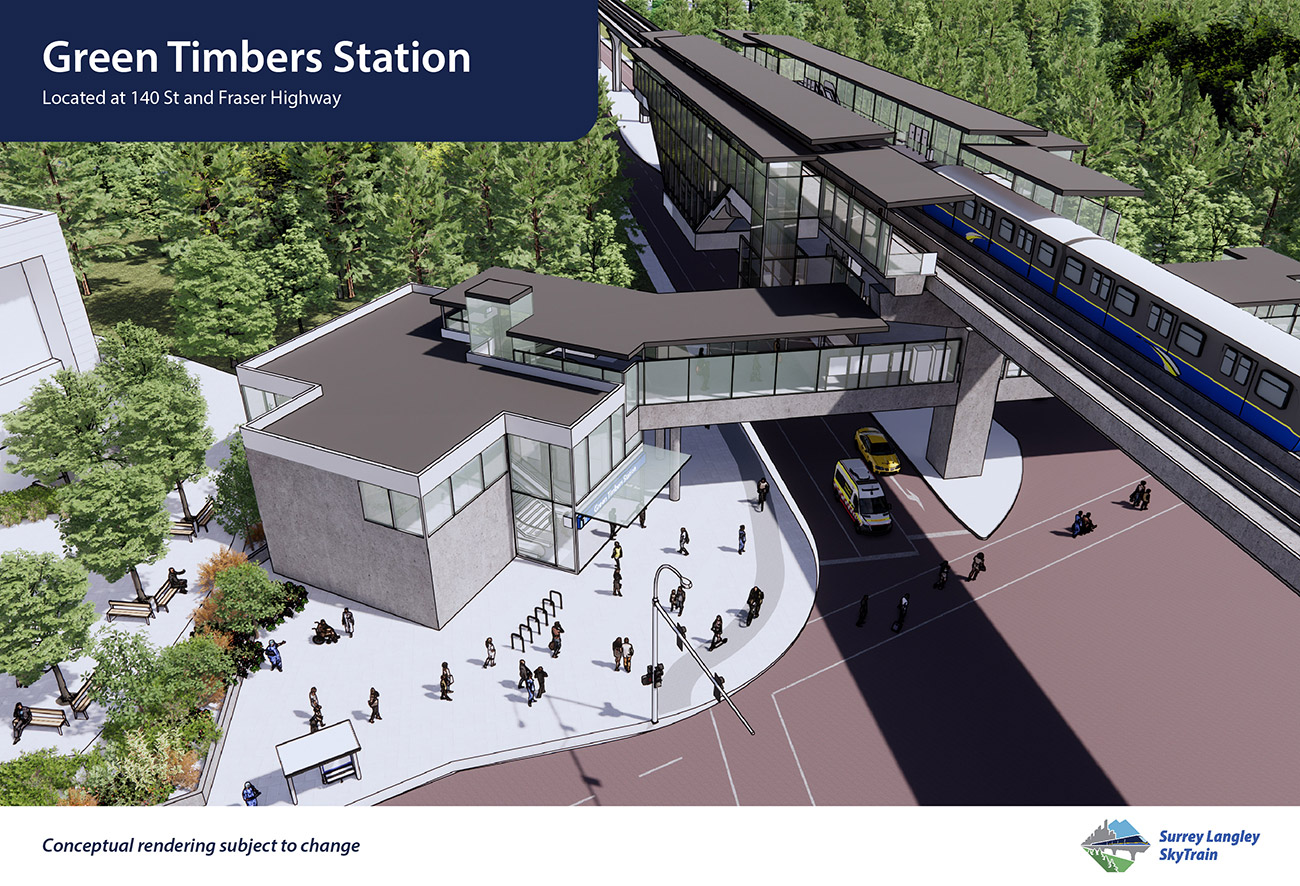
Transit-Oriented Developments
For the Fraser Valley and other regions, getting there may not necessarily be half the fun.
more >

The Case for Regional Rail
A regional rail network could cut travel and commute times by up to 50% or more–but is it worth the price tag?
more >
ADVOCACY
Political Liaisons
FVREB meets with MLAs in Victoria as part of BCREA’s Government Liaison Days.
more >
From the CEO
Baldev Gill
Building Momentum Together
The clock is now ticking for BC’s housing strategy.
more >
Insight
Brendon Ogmundson
Generations Apart – Housing Affordability Then and Now
Brendon Ogmundson on the new generation gap.
more >
TRENDING
The High Cost of Being World-Class
When it comes to Top-10 lists, be careful what you wish for.
more >
Last Word
Patrick Condon
The housing affordability crisis is really a land affordability problem
Why didn’t adding so much new housing supply lower prices?
more >